Publisher:
360 Heller Media
8635 W Sahara Ave #3170
Las Vegas, NV 89117-5858
USA

contact@8doodles.com
EN +1 561 668 3360
PL +1 561 668 3361

Terms and Conditions
Privacy Policy
FAQ

image

Learning Through Play Center

Educational knowledge center exploring how games, play, and creative experiences support learning, cognitive development, and lifelong growth — for children, families, and adults. Play is not just fun. It’s how we learn.

Learning, creativity, and connection — through play

Play is one of the most natural ways people learn — long before formal education begins, and long after it ends. Through games, challenges, and shared experiences, we develop thinking skills, creativity, emotional awareness, and the ability to connect with others.

Learning Through Play Center is a dedicated knowledge space for parents, families, and lifelong learners who want to understand why play matters and how games support real development. Here we explore board games, card games, dice games, puzzles, and hybrid play experiences that combine offline interaction with optional online extensions.

Rather than treating games as distractions, we look at them as tools — tools that support curiosity, strengthen relationships, and help minds stay active at every stage of life.

800×800-doodle-red

Why Learning Through Play Matters

Play is not an extra added to learning — it is one of its most effective foundations. Through play, the brain actively processes information, experiments with solutions, and builds connections between ideas, emotions, and actions.

Games naturally engage attention, encourage problem-solving, and create space for trial and error without pressure. When people play, they are more open to learning, more willing to explore new strategies, and more likely to remember what they experience. This applies not only to children, but also to adults and older people who benefit from maintaining cognitive flexibility and curiosity.

Learning through play supports skills that matter beyond the game itself — critical thinking, decision-making, emotional awareness, communication, and creativity. These skills develop gradually through repeated, meaningful experiences, not through passive consumption.

In this section, we explore why play works as a learning tool and how thoughtfully designed games can support real development at every stage of life.

What Is Learning Through Play? A Practical Guide for Parents

Why Board Games Support Cognitive Development in Children and Adults

Play vs Screen Time: How Games Encourage Active Learning

How Games Help Build Problem-Solving and Decision-Making Skills

Learning Without Pressure: Why Play Improves Focus and Memory

Can Adults and Seniors Learn Through Play? The Science Behind It

Games as Educational Tools

Games are more than entertainment. When thoughtfully designed, they become tools that support learning through active participation, interaction, and experience. Board games, card games, dice games, and puzzles engage the brain in ways that passive activities cannot.

Different types of games develop different skills. Strategic board games encourage planning and long-term thinking. Card games often support memory, pattern recognition, and quick decision-making. Dice games introduce elements of probability, risk assessment, and adaptability. Puzzles strengthen logical reasoning, spatial awareness, and persistence.

What makes games especially effective as educational tools is their ability to combine challenge with enjoyment. Players stay engaged because they are curious, not because they are instructed. Learning happens naturally — through experimentation, cooperation, and reflection — without pressure or fear of making mistakes.

In this section, we explore how various types of games support cognitive, emotional, and social development, and how they can be used intentionally in everyday life.

800×800-doodle-red

Board Games as Educational Tools: How Strategy Builds Thinking Skills

Card Games and Memory: Why Simple Mechanics Can Train the Brain

Dice Games and Probability: Learning Through Chance and Choice

Puzzles and Logical Thinking: Why Solving Problems Feels So Rewarding

From Fun to Function: Turning Games into Everyday Learning Tools

How to Choose Games That Support Learning at Different Ages

800×800-doodle-red

Learning Through Play for Families & Everyday Life

Learning through play fits naturally into everyday life. Families rarely need more screens or structured lessons — they need shared moments, meaningful interaction, and simple activities that bring people together.

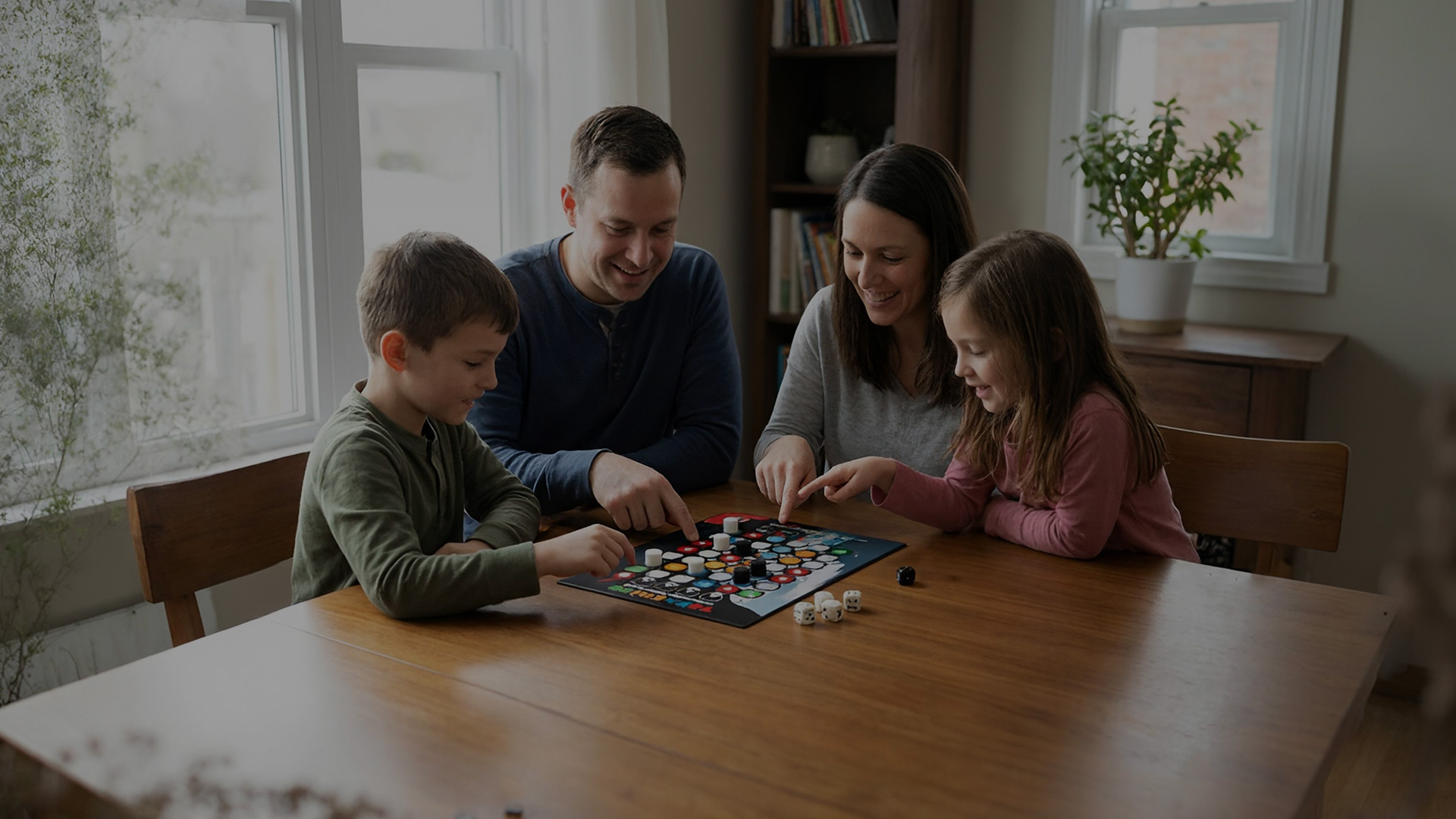
Games create space for conversation, cooperation, and presence. Around a table, during a trip, in a hotel room, or at a campsite, play becomes a way to slow down, connect, and engage minds without pressure. It offers children a sense of agency, adults a moment of focus, and families a shared rhythm that doesn’t depend on constant stimulation.

For parents who homeschool or support learning at home, games offer flexible tools that adapt to different ages, learning styles, and energy levels. The same game can be used casually for fun, or intentionally as part of a learning routine — encouraging curiosity, reasoning, and communication.

This section explores how learning through play supports family life, travel, and everyday routines — making education feel natural, enjoyable, and sustainable.

Learning Through Play at Home: How Families Use Games Every Day

Screen-Free Entertainment: Games That Travel Well

Board Games for Road Trips, Hotels, and Outdoor Adventures

Homeschooling Through Play: Using Games as Flexible Learning Tools

Why Shared Play Strengthens Family Bonds

Simple Games, Meaningful Moments: Learning Without a Schedule

Play, Memory & Cognitive Health

Learning through play doesn’t stop with childhood. For adults and older people, play plays a crucial role in maintaining cognitive health, mental flexibility, and a sense of curiosity about the world.

Games challenge the brain to recognize patterns, recall information, plan ahead, and adapt to changing situations. These processes support memory, attention, and problem-solving skills — especially when practiced regularly in a relaxed, enjoyable way. Unlike passive activities, games require active participation, keeping the mind engaged and responsive.

Play also supports emotional well-being. Shared games reduce stress, encourage social interaction, and create moments of connection that are essential for mental health at every age. For seniors, playing with family members or peers can help maintain independence, confidence, and a sense of belonging.

In this section, we explore how games support memory, focus, and cognitive health across adulthood and later life — making play a meaningful part of lifelong learning.

800×800-doodle-red

How Games Support Memory and Cognitive Health in Adults

Playing to Stay Sharp: Games as Everyday Brain Training

Board Games and Mental Flexibility: Why Strategy Matters

Social Play and Emotional Well-Being at Every Age

Games for Seniors: Supporting Memory Without Pressure

Why Lifelong Learning Needs Play

800×800-doodle-red

Offline Play, Online Evolution

Traditional games work best when they bring people together around a table — encouraging conversation, focus, and shared experience without screens. That’s why every game is designed to be fully playable offline, using physical components and simple, clear rules.

At the same time, selected games offer optional online extensions that allow the experience to grow and evolve over time. Each game includes a dedicated NFC keychain attached to the zipper of its textile pouch. By scanning the NFC keychain with a mobile device, players instantly access a dedicated set of QRious Cards created specifically for that game.

No accounts. No logins. No setup.
An internet connection is only required to access this online layer.

These digital card sets expand gameplay with additional prompts, creative challenges, story elements, and variations that can significantly change the flow of the game. The physical game remains the foundation — the online content supports learning, creativity, and adaptability when players choose to use it.

This hybrid approach allows families to enjoy screen-free play while introducing technology in a controlled, meaningful way — as a tool, not a distraction.

Offline Games, Online Extensions: A New Model of Learning Through Play

Hybrid Play Explained: Combining Physical Games with Digital Content

Why Optional Technology Works Better Than Screen-Based Games

Using Mobile Tools to Support, Not Replace, Traditional Play

Designing Games for Focus in a Digital World

Games That Grow With You

Well-designed games don’t have to end when the rules are learned or when players grow older. They can adapt, evolve, and take on new meanings over time — just like the people who play them.

Each game is created as an open framework rather than a closed system. Players are encouraged to experiment, adjust rules, introduce variations, and invent their own ways of playing. This openness supports creativity, critical thinking, and a sense of ownership over the experience.

Through optional membership access, players who want to go further can create their own custom QRious Card sets for each purchased game. These personalized extensions allow families, educators, or creative players to tailor games to specific interests, learning goals, or age groups — without changing the physical game itself.

Thanks to this model, games don’t become outdated or repetitive. They evolve alongside players, offering new challenges, perspectives, and ways of learning. Supported by the 8doodles platform, games remain living experiences that grow with imagination, curiosity, and time.

800×800-doodle-red

Why Open-Ended Games Support Creativity and Learning

From Fixed Rules to Flexible Play: Letting Games Evolve

Personalized Games as Long-Term Learning Tools

How Creating Your Own Rules Builds Confidence and Thinking Skills

Why Games Don’t Have to Get Old

800×800-doodle-red

Learning Through Play as a Long-Term Investment

Play is not a trend, a phase, or a distraction. It is a fundamental way people explore the world, develop skills, and connect with others — throughout life.

Learning Through Play Center brings together educational insights, real-world examples, and thoughtful perspectives on how games support creativity, thinking, memory, and relationships. From families and travelers to lifelong learners and communities, play offers a shared language that adapts to different needs and stages of life.

By combining offline-first game design with optional digital extensions, and by encouraging personalization and creative rule-making, learning through play becomes flexible, meaningful, and sustainable. It’s not about consuming content or completing levels — it’s about investing in creativity that grows over time.

New educational articles are added regularly, expanding this knowledge base with research-inspired insights and practical perspectives on learning through play.

Frequently Asked Questions

What does “learning through play” really mean?

Learning through play refers to gaining skills and understanding through active engagement, exploration, and experience. Games encourage thinking, problem-solving, creativity, and social interaction in a natural and enjoyable way.

Are these games suitable only for children?

No. Learning through play works at every age. Children, adults, and seniors all benefit from games that support memory, focus, flexibility, and social connection.

Can the games be played without internet access?

Yes. All games are fully playable offline. An internet connection is only needed to access optional online extensions through QRious Cards.

What are QRious Cards?

QRious Cards are online card sets accessed via mobile devices. They act as optional extensions to physical games, adding creative prompts, challenges, and variations that expand gameplay.

Do players need to create an account or log in?

No. Scanning the NFC keychain attached to the game pouch gives instant access to the dedicated QRious Cards — without registration or login.

Can games be personalized or modified?

Yes. Games are designed as open systems. Players can change rules, invent new ways of playing, and — with optional membership access — create their own custom card sets for each game.

Is learning through play useful for homeschooling or travel?

Absolutely. Games are flexible, portable, and adaptable, making them ideal for homeschooling, travel, outdoor activities, and everyday family life.

Is learning through play supported by research?

Yes. Learning through play is widely recognized in educational psychology and cognitive science. Research shows that active, experience-based learning improves retention, motivation, and understanding compared to passive instruction.

How much time should families spend playing games to see the benefits?

There is no fixed rule. Even short, regular play sessions can support learning and connection. What matters most is consistency, engagement, and shared experience — not duration.

Are digital extensions required to fully enjoy the games?

No. All games are designed to be complete offline experiences. Digital extensions through QRious Cards are optional and meant to expand gameplay when players choose to use them.

Can these games be used in educational or community settings?

Yes. Games can be used in homeschooling, workshops, community spaces, hotels, or shared environments. Their flexible design allows adaptation to different groups and contexts.

What makes open-ended games different from traditional games?

Open-ended games invite players to modify rules, explore variations, and create their own ways of playing. This supports creativity, autonomy, and deeper engagement over time.


SHARE ON


We use cookies to give you the best online experience. By agreeing you accept the use of cookies in accordance with our cookie policy.

Close Popup
Privacy Settings saved!
Privacy Settings

When you visit any web site, it may store or retrieve information on your browser, mostly in the form of cookies. Control your personal Cookie Services here.

These cookies are necessary for the website to function and cannot be switched off in our systems.

Technical Cookies
In order to use this website we use the following technically required cookies
  • wordpress_test_cookie
  • wordpress_logged_in_
  • wordpress_sec

WooCommerce
We use WooCommerce as a shopping system. For cart and order processing 2 cookies will be stored. This cookies are strictly necessary and can not be turned off.
  • woocommerce_cart_hash
  • woocommerce_items_in_cart

Decline all Services
Save
Accept all Services